A Culinary Journey Through Kenya: Your Essential Food Guide
5 min readKenya's vibrant culinary landscape tells the story of a nation shaped by diverse cultures, trading routes, and rich agricultural traditions. From the bustling streets of Nairobi to the coastal towns of Mombasa, Kenyan cuisine offers an incredible array of flavors that reflect the country's multicultural heritage. Whether you're a first-time visitor or a seasoned traveler, these three iconic dishes represent the heart and soul of Kenyan cooking.
A Culinary Journey Through Kenya

Nyama Choma: The King of Kenyan Barbecue
What it is: Nyama Choma, literally meaning "roasted meat" in Swahili, is Kenya's beloved barbecue tradition that brings people together across all social boundaries.
The Experience: Picture yourself at a local choma zone (barbecue joint) where the air is thick with aromatic smoke from charcoal grills. Skilled grill masters tend to perfectly seasoned cuts of goat, beef, or chicken, turning them slowly over glowing coals until they achieve that perfect balance of crispy exterior and juicy interior.
How it's served: The meat arrives on wooden boards or metal plates, accompanied by kachumbari (a fresh tomato and onion salad), ugali, and sometimes rice or chapati. The beauty of Nyama Choma lies in its simplicity – quality meat, minimal seasoning (usually just salt and sometimes a touch of coriander), and the communal experience of sharing.
Where to try it: While available throughout Kenya, some of the best Nyama Choma can be found at roadside joints along major highways, local choma zones in residential areas, and even upscale restaurants that have perfected this traditional cooking method.
Pro tip: Don't rush the experience. Nyama Choma is as much about the social aspect as it is about the food. Expect to spend hours eating, talking, and enjoying the company of friends and family.

Ugali: The Foundation of Kenyan Meals
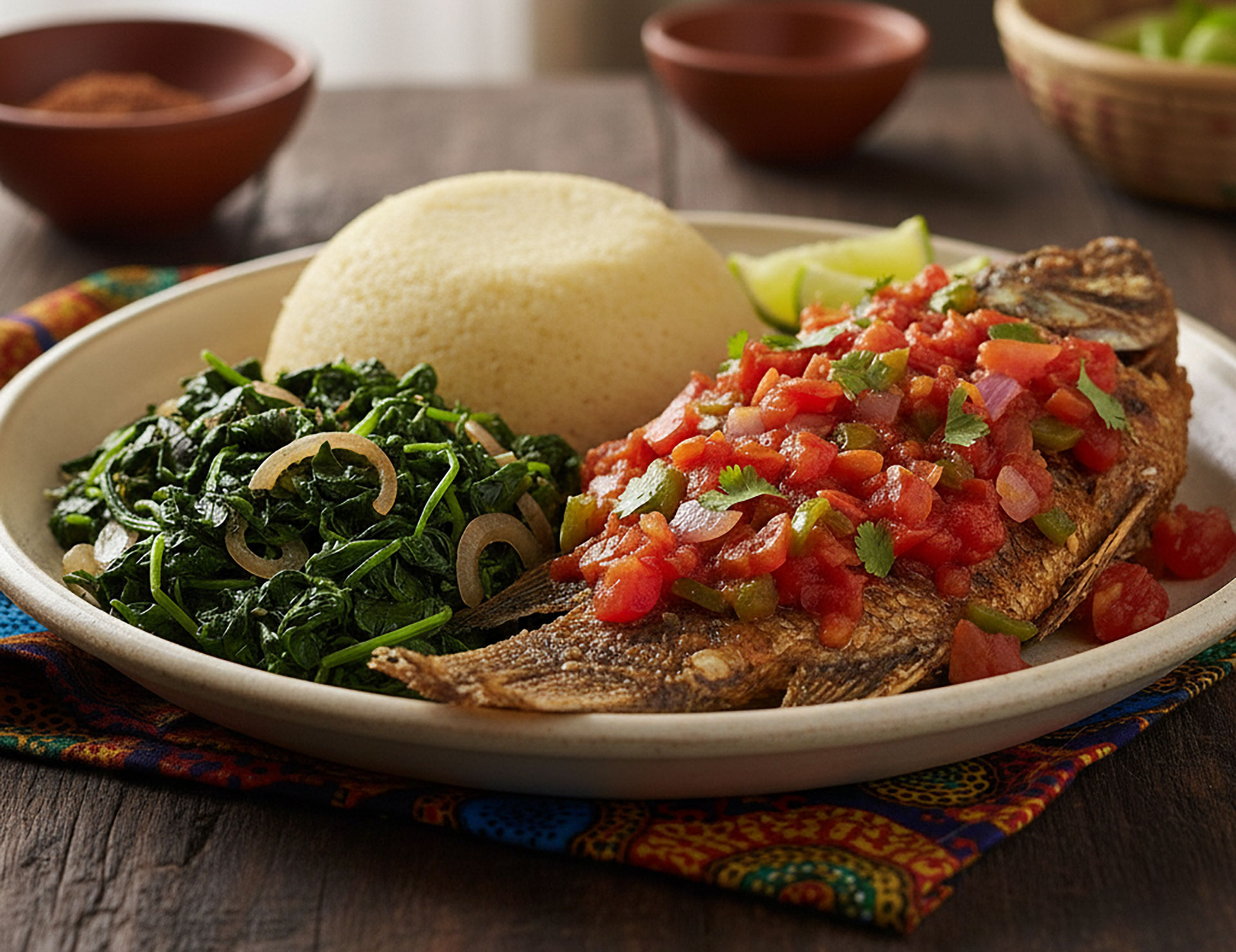
What it is: Ugali is Kenya's staple food – a simple yet satisfying dish made from white cornmeal (maize flour) cooked with water to create a dense, polenta-like consistency.
Cultural significance: More than just food, ugali represents sustenance and tradition in Kenyan households. It serves as both plate and utensil, used to scoop up stews, vegetables, and meat dishes. For many Kenyans, a meal isn't complete without ugali.
The art of preparation: Making perfect ugali requires skill and experience. The maize flour is gradually added to boiling water while constantly stirring to prevent lumps. The mixture is cooked until it reaches the right consistency – firm enough to hold its shape but not too dry.
How to eat it: Ugali is eaten with your hands. Pinch off a small portion, roll it into a ball, make a small indent with your thumb, and use it to scoop up accompanying dishes like sukuma wiki (collard greens), nyama (meat), or fish stew.
Variations: While white ugali is most common, you'll also find yellow ugali (made with yellow cornmeal) and mixed grain versions that include millet or sorghum.
Perfect pairings: Ugali complements virtually any Kenyan dish but is especially delicious with spicy stews, grilled meats, and leafy green vegetables.

Pilau: A Fragrant Feast for the Senses
What it is: Pilau is Kenya's aromatic spiced rice dish that showcases the country's historical connections to Arab, Persian, and Indian cultures through the ancient spice trade routes.
The magic of spices: What sets Kenyan pilau apart is its complex blend of whole spices: cardamom pods, cinnamon sticks, cumin seeds, black peppercorns, cloves, and bay leaves. These spices are first fried in oil to release their essential oils before adding rice, creating layers of flavor that permeate every grain.
Cooking technique: Traditional pilau is cooked in a heavy-bottomed pot called a sufuria. The rice is first sautéed with onions and spices, then slowly cooked with seasoned broth, often containing meat or chicken stock. The result is rice that's fluffy, aromatic, and deeply flavorful.
Regional variations: Coastal pilau tends to be more heavily spiced with influences from Swahili culture, while inland versions might be milder. Some regions add raisins, nuts, or even hard-boiled eggs to their pilau.
Special occasions: Pilau is often prepared for celebrations, religious holidays, and special gatherings. It's considered a dish that honors guests and marks important occasions.
Serving suggestions: Pilau is typically served with kachumbari, roasted meat, or chicken curry. A glass of cold maziwa lala (fermented milk) or chai (spiced tea) makes the perfect accompaniment.
Tips for Food Adventurers
Start local: Begin your culinary journey at local mama joints (small family-run restaurants) where recipes have been passed down through generations.
Embrace the hands-on approach: Many Kenyan dishes are traditionally eaten with hands. Don't be shy – it's part of the authentic experience.
Timing matters: Lunch is typically the main meal of the day, served between 12 PM and 2 PM. Many restaurants may run out of popular dishes by evening.
Spice levels: Kenyan food can be spicy, but it's usually more about aromatic spices than heat. Don't hesitate to ask about spice levels if you're sensitive to heat.
Vegetarian options: While meat features prominently, Kenya offers excellent vegetarian dishes including githeri (corn and beans), various legume stews, and fresh vegetable preparations.
The Social Aspect of Kenyan Dining
Food in Kenya is deeply social. Meals are meant to be shared, conversations flow freely, and time is taken to enjoy both the food and the company. Whether you're joining a family for Sunday lunch or grabbing a quick bite at a local eatery, you'll find that Kenyan hospitality shines through every meal.
Conclusion
These three dishes – Nyama Choma, Ugali, and Pilau – represent just the beginning of Kenya's incredible culinary story. Each bite connects you to centuries of tradition, cultural exchange, and the warmth of Kenyan hospitality. As you explore these flavors, you're not just eating food; you're experiencing the heart of Kenyan culture.
So come hungry, come curious, and prepare to fall in love with the rich, diverse, and utterly delicious world of Kenyan cuisine. Karibu chakula! (Welcome to the meal!)